
 Global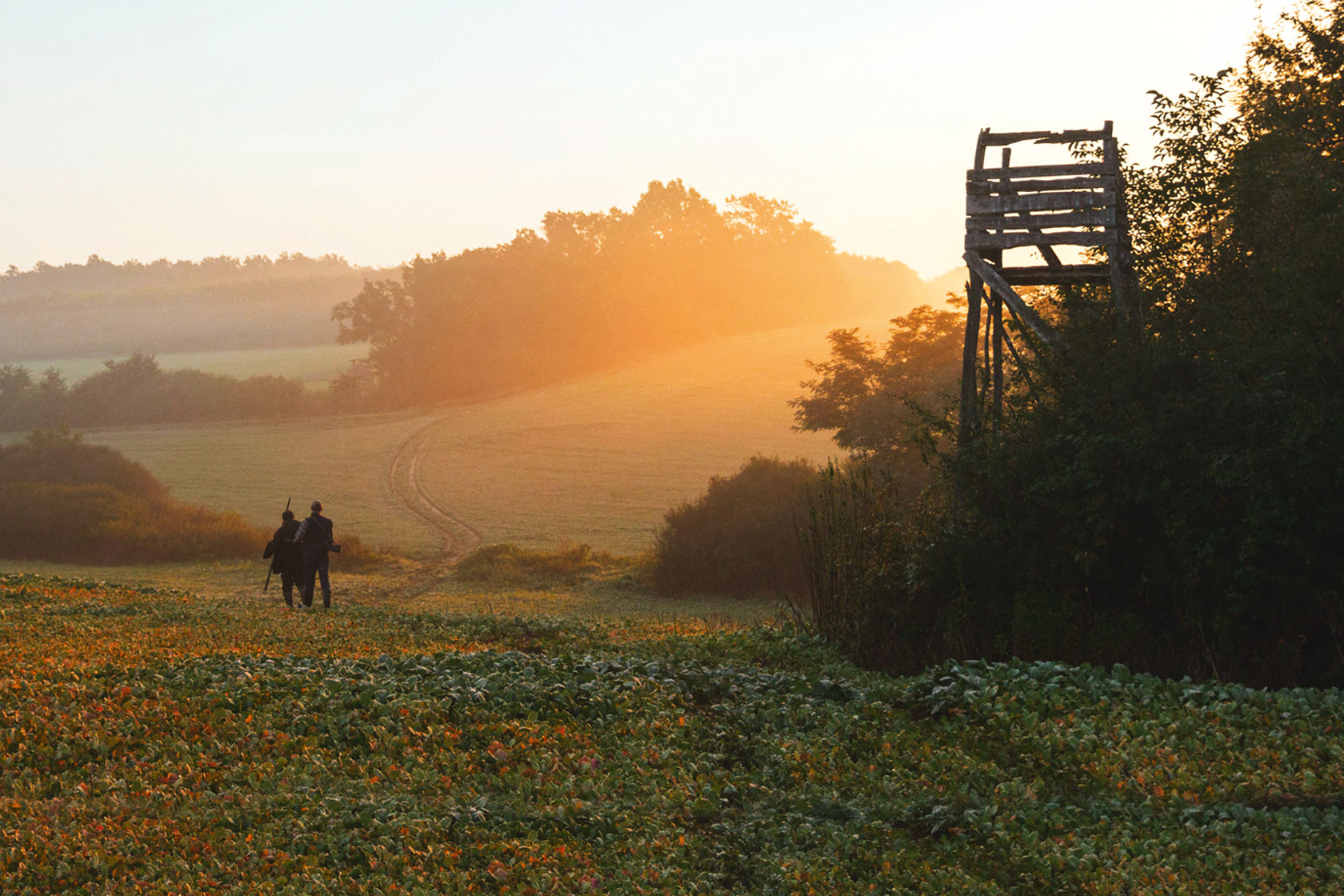
The corporate mission statement “One with Nature” stems from the Blaser Group’s core values and our special connection to nature. We develop and manufacture high-quality equipment for unique experiences in nature and contribute to the preservation of biodiversity and the protection of nature. For hunting has been and remains a defining factor in human development and makes an important contribution to the future. It is active conservation, passes on knowledge to the next generation, and simultaneously provides natural food. Hunting also embodies a responsible approach to natural resources. For us, therefore, “One with Nature” serves as both a guiding principle and a source of motivation and inspiration for our actions.
Climate
Our goal is to reduce greenhouse gas emissions over the long term and avoid them as much as possible. Since 2020, we have been conducting a carbon footprint analysis to identify areas for improvement and make our climate protection measures measurable. By 2045, we aim to operate in a climate-neutral manner through concrete action — namely, sustainable investments, optimized processes, and the use and research of alternative raw materials. We consciously choose not to offset our emissions through certificates, as this often gives the impression of greenwashing. Instead, we support projects that we can directly influence and that are close to our hearts – such as the long-term rhino conservation program in Namibia. The budget allocated for this significantly exceeds the costs of traditional carbon credits.
Biodiversity
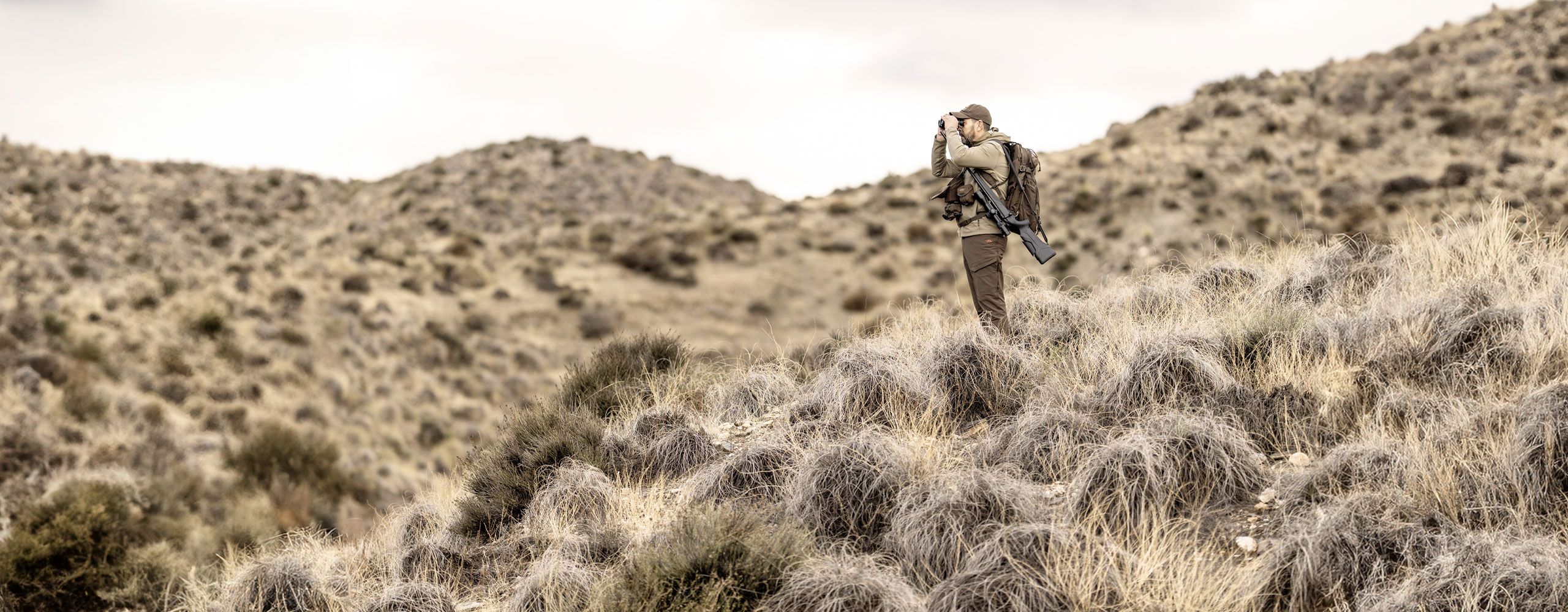
With our products, we help our customers responsibly carry out their wildlife management and practical conservation efforts. The European Biodiversity Strategy for 2030 identifies invasive species as one of the main causes of biodiversity loss. Especially when it comes to invasive species such as raccoons or gray squirrels, hunters can contribute to the protection of native species and sensitive ecosystems through population control. At the same time, hunters often play a key role in monitoring species and habitats. They also promote an understanding of ecological relationships and the importance of quiet zones for wildlife. Non-game species also benefit from this.

Making a difference together. Thanks to our employees, we are internationally successful and firmly rooted in our local communities. They contribute every day and achieve shared goals with dedication. We support this commitment through numerous initiatives, such as development and training opportunities, a positive work-life balance, and a comprehensive workplace health management program, #BlaserCare. We also take on regional responsibilities, for example through a high rate of apprenticeships or our involvement with the Isny Community Foundation.
Business operations and social responsibility are integral parts of our philosophy. Only by acting responsibly can we contribute to the long-term preservation of our environment. Personal integrity and compliance with all laws are of the utmost importance – for management and employees alike. To detect violations at an early stage, we have a whistleblower system through which reports can be submitted confidentially and anonymously.
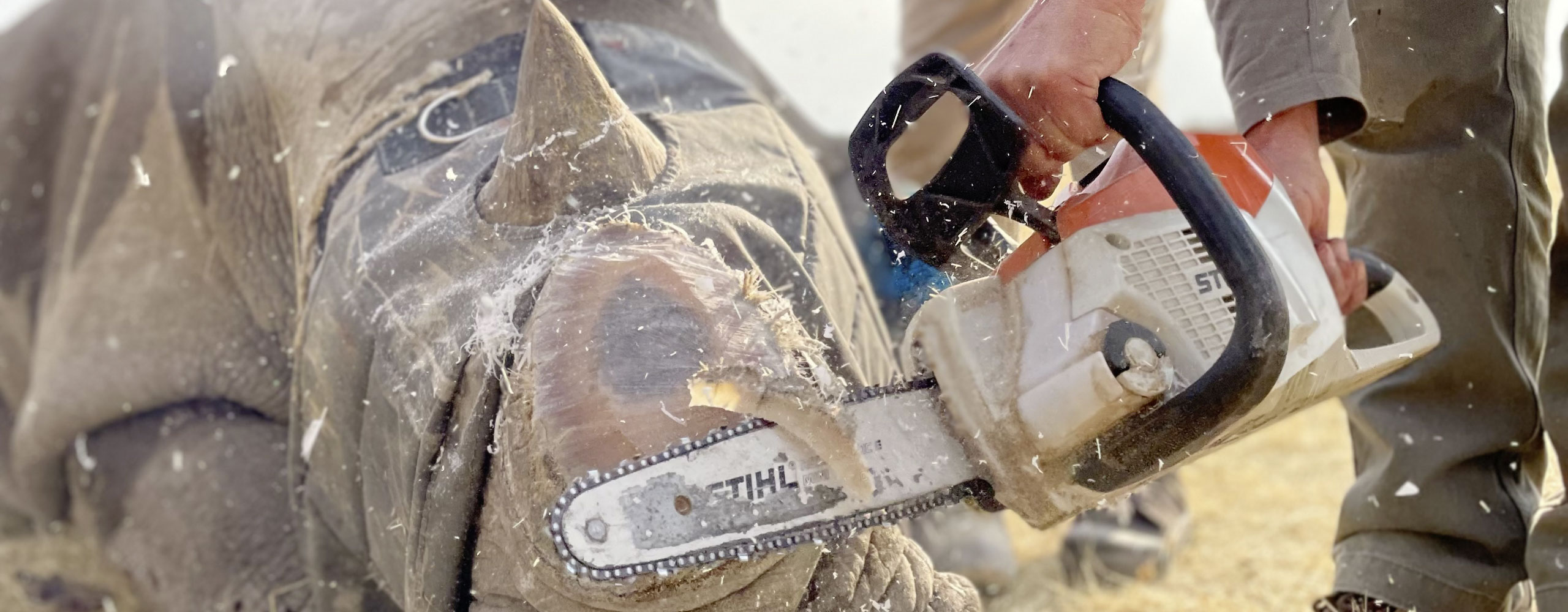
Wildlife management at Sney Rivier Lodge in Namibia includes measures such as feeding during droughts or the release of stolen pangolins into the wild in collaboration with the Pangolin Conservation and Research Foundation. For years, however, the greatest effort has been focused on protecting the white rhinos that have lived there since 2008. “We want to contribute to the conservation of this species,” says Lodge Manager Conway Volek. The protection involves significant financial costs and dangerous missions for the gamekeepers. Dehorning is considered the most effective conservation measure. In this procedure, the rhinos are anesthetized by a veterinarian, the horn is cut off and then smoothed. “This is not painful for the rhino and is similar to cutting a person’s nails,” explains the professional hunter, “afterward, the horn slowly grows back.” This very labor-intensive effort, in which the rhinos are located using helicopters, has paid off in the past, and white rhinos have already been transferred to other nature reserves.
Our other projects
The Blaser Group supports the International Council for Game and Wildlife Conservation (CIC)’s chamois project. Using tracking devices, scientists aim to develop sustainable management strategies to protect chamois and their alpine habitat.
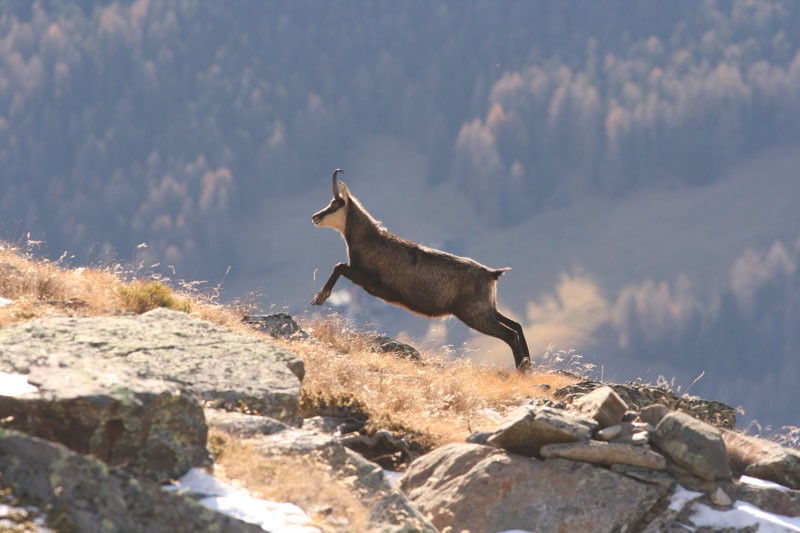
The chamois is coming under pressure. Where it is affected by rising temperatures, it only has two options: To climb higher and encounter a growing number of summer tourists who, thanks to the development of higher areas, are traveling by e-bike, among other things. If it moves downwards, the already familiar conflicts between forestry and hunting will arise. There is therefore no simple answer to the question of whether their population is endangered.
Creating a data basis
One important reason for this is the lack of data. “In many areas, we don‘t even know how many chamois there are, because the EU member states do not comply with their obligation to count them,” says the Head of Research, Professor Dr. Klaus Hackländer from BOKU University Vienna. However, this is the basic prerequisite for a responsible and sustainable management. Germany is also one of the defaulters. “The Fauna- Flora-Habitat Directive (FFH) expressly stipulates that the wild animal species listed in Annex 5, which includes the chamois, may only be managed if it is ensured that this management does not endanger the favorable conservation status of the population,” explains the wildlife biologist, who is also a board member of the German Wildlife Foundation. But without precise population figures, this is naturally difficult.
This is precisely where the three-year CIC research project comes in, in which BOKU University Vienna and the universities of Sassari (Italy) and Zagreb (Croatia) are also involved. “We are tagging chamois to find out how chamois populations react to climatic changes in the Alpine region,” explains Hackländer, “in addition, thanks to the transmitters, we also find out what the chamois do and how they react to disturbances, for example from ski tourers.” At the same time, the transmitters allow conclusions to be drawn about the populations, “even for hunters who know their hunting grounds very well, it sometimes turns out that their resident game is also classified as resident game by their neighbors.” In this way, the hunters, who play an important role in the project anyway, also learn something new. Without them, the scientists would not even know how the chamois are doing in many areas. The hunters also help with the tracking of the wild animals.
Develop protection strategies
It will take at more time to develop appropriate conservation strategies to protect the chamois and its alpine habitat, but one thing is already clear: if you want the chamois to keep its place in the alpine habitat, you have to be considerate and take a step back. “This applies to all nature users,” says Hackländer.
For three years, we have been lending drones and thermal imaging cameras to hunters and gamekeepers as part of the “Blaser Fawn Rescuers” wildlife project, to help them effectively protect small game during the mowing of grassland in early summer. During this period, hundreds of fawns, as well as other wild animals such as duck clutches or young hares, were saved. After the Blaser fawn rescuers were initially only active in Germany, we also lent the drones in other European countries. The project was successfully completed in 2023. A new nature conservation initiative is to follow.
The garden dormouse is an adaptable omnivore that can survive in many different habitats. Nevertheless, the Animal of the Year 2023 is highly endangered for reasons that are still unknown. MINOX is supporting the German Wildlife Foundation in its search for these secretive little animals.
The original habitat of the garden dormouse is coniferous and mixed forests in mountainous regions with lots of rocks, dense shrubbery and berry-bearing shrubs. However, as a cultural follower, the dormouse can now also be found in gardens and even in the city. Nevertheless, the range of the rodent with the distinctive black mask in Europe has shrunk by about 50 percent in the past 30 years. It has completely disappeared from many regions. The German Wildlife Foundation wanted to get to the bottom of this development and, with the research project “Garden Dormouse – the Search in Saxony-Anhalt”, find out whether and where the small dormouse occurs in the Harz Nature Park. For this purpose, MINOX provided the foundation with a selection of its wildlife cameras, which were set up at promising locations. Just a few weeks after the start of the project, success was already being recorded – the first garden dormouse had been caught in a photo trap! More followed shortly after.
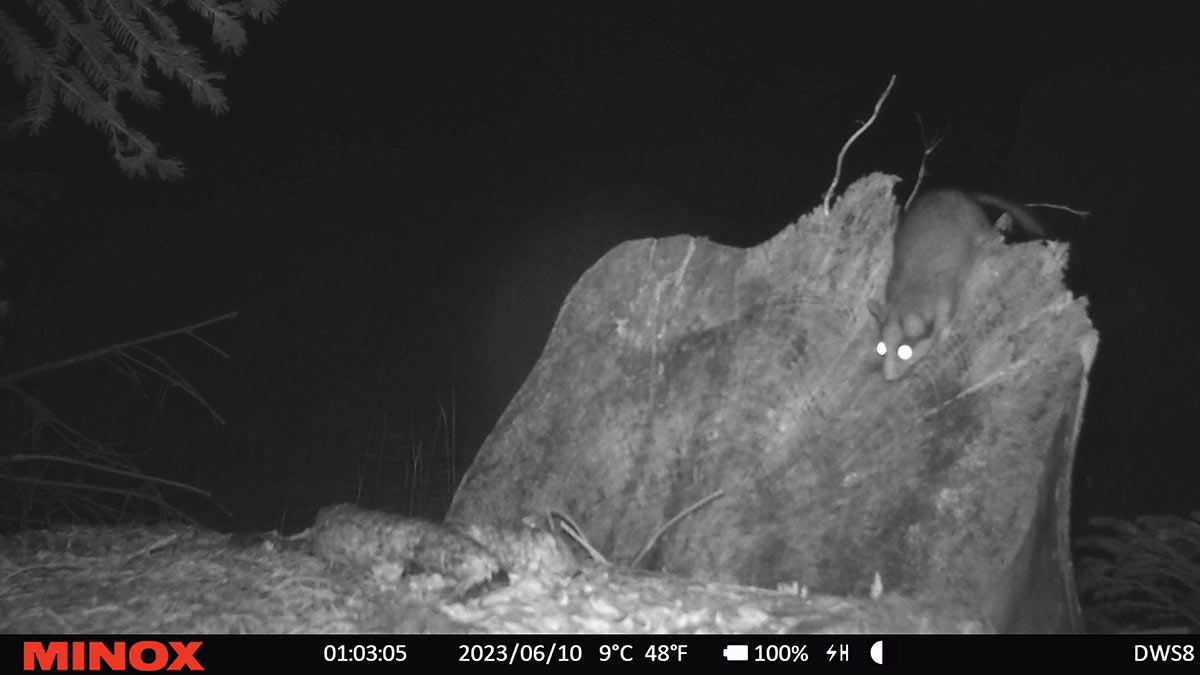
A great success for the research team and a glimmer of hope for the little dormice. The data collected will serve as a basis for further measures, such as the creation of a network between the areas. This can be achieved, for example, by planting connecting woody structures. This is an important project for our native wildlife, which MINOX will be happy to continue supporting with its equipment in the future.
Please feel free to send any suggestions or questions to verantwortung@blaser-group.com.
Further information can be found in our sustainability reports.